
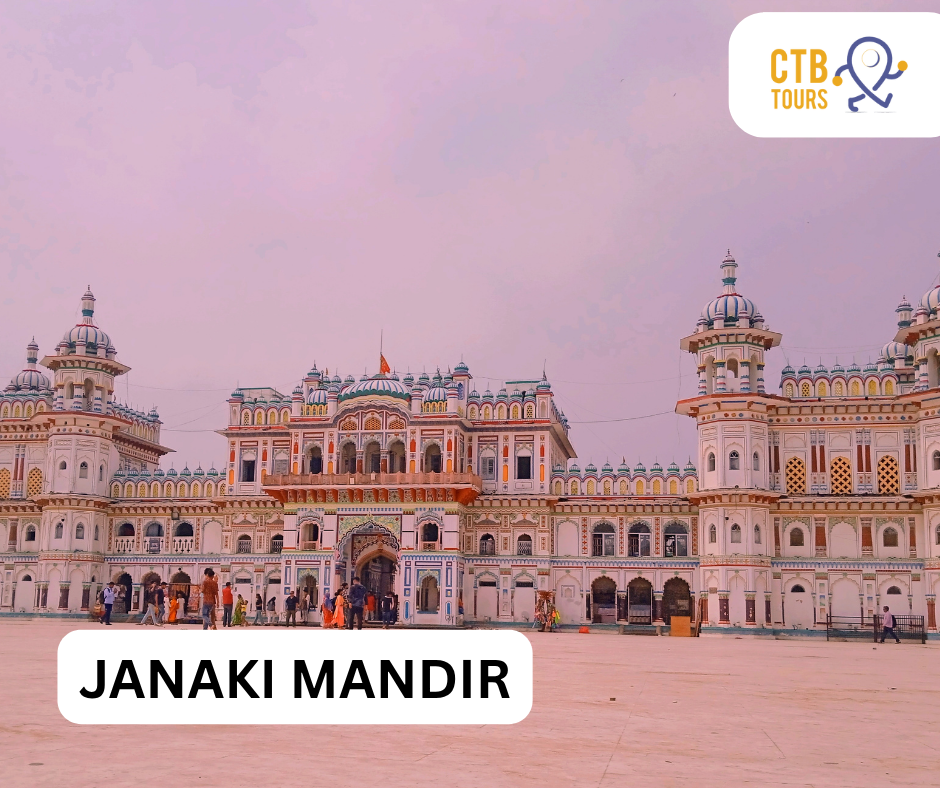
Janaki Mandir is one of the most auspicious places for any Hindu as it is the birthplace of Goddess Sita (Janaki), the companion of Lord Ram and daughter of King Janak. Often referred to as the Nau Lakha Mandir, this majestic structure is a striking marvel with Mughal-Rajput architecture, domes rising like royal crowns, and courtyards echoing tales from the Ramayana. During Ram Navami, Vivah Panchami, Dashain and Tihar, the temple as well as the whole city just feels like heaven on earth. Whether you’re a devotee, a traveller chasing beauty, or someone searching for stories that move the soul, Janaki Mandir is not to be missed. In its architecture, it holds history, and in its air, it carries the timeless love story of Lord Ram and Mata Sita that echoes across centuries from the heart of Janakpur.
History Of Janaki Mandir
Janaki Mandir is a Hindu temple in Janakpur Dham, dedicated to the Hindu goddess Sita. Janakpur is an important pilgrimage site for Hindus due to its connection with the Hindu epic, the Ramayana. It is believed that Goddess Sita was born here, and it is the place of her marriage to Lord Ram. This place is deeply rooted in the pages of the Ramayana and the rich cultural heritage of Mithila. It is believed that thousands of years ago, King Janak of Mithila discovered a baby girl in a farm land while ploughing the land as part of a sacred ritual. That divine child was Mata Janaki (the earthly daughter of Bhumi Devi ), the spiritual embodiment of purity, strength, and devotion. Mata Janaki (later called Mata Sita) would later go on to marry Lord Ram, the prince of Ayodhya, in a wedding that has since become the stuff of epics.
Centuries passed, but the sanctity of Janakpur remained alive in oral traditions and ancient scriptures. Then, in 1910 AD, a new chapter in Janakpur’s history was written when Queen Vrisha Bhanu of Orchha (in present-day Madhya Pradesh, India) visited this site. It is said that she discovered a golden statue of Sita, hidden beneath the earth, which made her believe that it was an omen, or perhaps a divine reminder of the history of this place. Deeply moved by this revelation, the queen made a resolve to build a grand temple in honour of the goddess.
The result was the Janaki Mandir, a white-marble structure built at the cost of nine lakh rupees, which earned it the nickname “Nau Lakha Mandir.” The architecture itself blends Mughal domes, Rajput intricacy, and local Mithila art traditions, having three domes and 60 rooms. The walls of the temple have Madhubani paintings. All its 60 rooms are decorated with the flag of Nepal, Coloured glass, engravings and paintings, making it stand out from typical Nepali or Indian temple styles.
Pooja Timings At Janaki Mandir
Opening Hours: 5:30 AM to 11:00 AM and 4:00 PM to 8:30 PM.
Aarti Timings: Morning Aarti at 7:00 AM, Evening Aarti at 7:30 PM.
Entry Restrictions: The Mandir is open to all visitors. However, certain areas inside the mandir may not be accessible to the general public for religious reasons.
Attire: Modest clothing is accepted. Men should wear shirts covering the shoulders and pants or long shorts. Women are advised to wear long skirts or trousers with tops that cover the shoulders, ideally paired with a shawl. Avoid see-through, tight, or revealing outfits.
Photography: Photography is allowed in outdoor areas. Inside the temple, flash is not permitted. Visitors should always seek permission before photographing priests or religious ceremonies.
When to Visit Janaki Mandir
Janaki Mandir is open to all people, local and tourists, throughout the year. On some occasions, like Ram Navami in March/April or the Vivah Panchami in November/December, are the times when the mandir’s beauty is heavenly as these occasions are celebrated very beautifully by the locals. Other than that, choosing the right season can make your visit more enriching. Here’s a seasonal guide to help you plan
Best Time of Year to Visit Janaki Mandir
| Season | Months | Experience Highlights |
|---|---|---|
| Spring | March – May | Pleasant temperatures, blooming gardens are ideal for darshan and festive events like Ram Navami. |
| Monsoon | June – August | Lush surroundings, but there is frequent rainfall; it is a great time if you enjoy quiet spiritual moments. |
| Autumn | September – November | Clear skies, perfect for photography and grand celebrations like Vivah Panchami. |