
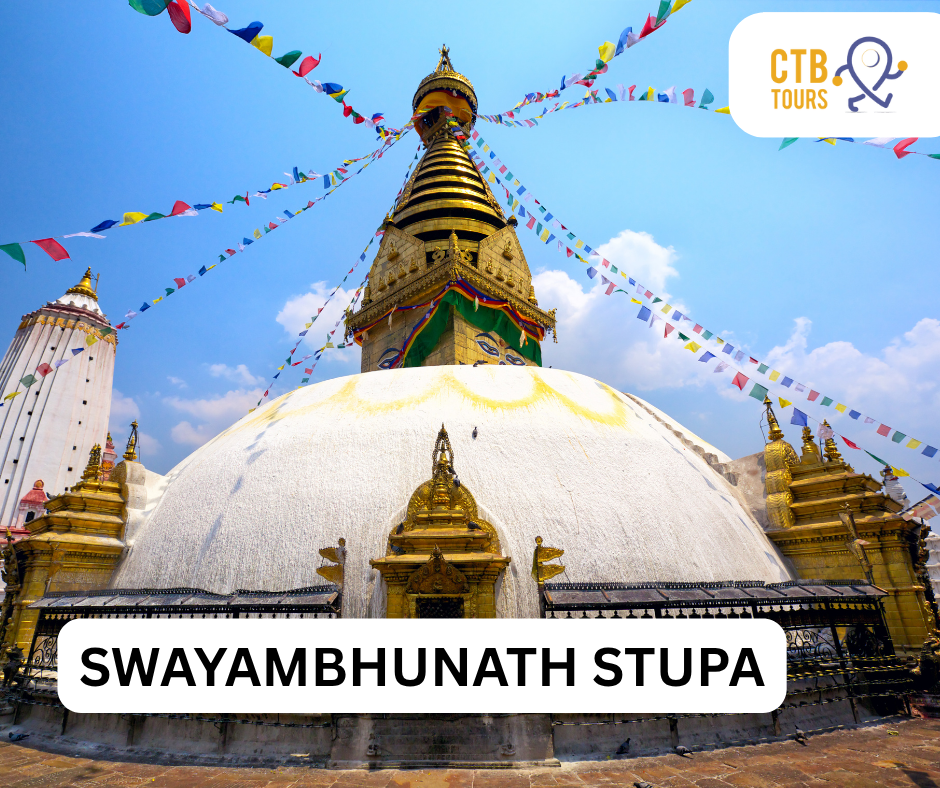
Swayambhunath, also known as the Monkey Temple, is situated at the top of the Kathmandu Valley. It is known to be a spiritual crossroad between Buddhist and Hindu cultures. It is a UNESCO World Heritage Site and hence caters to foreign and local tourists every year for its cultural abundance. From the fluttering prayer flags to the panoramic view of the valley and monkeys roaming freely, believed to be protecting the people of the valley, Swayambhunath is a mystical wonder and a must-visit place for every tourist.
Dakshinkali Temple Table Of Contents
History Of Swayambhunath Stupa
Swayambhunath, perched atop a hill west of Kathmandu, is one of Nepal’s most ancient and revered religious sites. While primarily it is a Buddhist site, Swayambhunath is revered by both Buddhists and Hindus, symbolising Nepal’s religious harmony. Its name, meaning “self-existent one”, reflects its legendary origin.
Ancient History
Kathmandu Valley was once a large lake, known as Nagdaha, which was a holy site that was visited by many sages and religious figures. It is said that once Vipasvi Buddha (the first incarnation of Shakyamuni Buddha) visited the lake on Poornima Chaitra Month and cast a lotus seed into the lake, which later transformed into a lotus with many thousands of petals. It is said that a celestial light came out of the lotus known as the Aadi Buddha. The self-illuminating light elevated the overall popularity of the Nagdaha. The light was also called Swayambhu, meaning “self-existent”.
It is said that bodhisattva Manjushri came to worship Nagdaha and the celestial light of the lotus. Upon his arrival, he noticed that it was very difficult for ordinary pilgrims to worship the light, as it was situated in the middle of this gigantic lake. So with the Chandrahasa (the holy sword of Lord Shiva) in his right hand and the Prajna Paramita Sutra (a Buddhist holy book) in his left hand, Manjushri cleaved the hill of Chobhaar with his sword and drained the lake, and hence came into existence the Kathmandu Valley.
Pooja Time In Swayambhunath Stupa
-
Opening Hours: Daily from 5:00 AM to 8:00 PM.
-
Pooja Timing: Morning rituals commence around 5:30 AM, with monks chanting and lighting butter lamps. Evening prayers typically start at 4:00 PM and continue until 7:00 PM.
-
Entry Restrictions: The stupa is open to all visitors, regardless of religion.
-
Attire: Modest clothing is recommended; shoulders and knees should be covered.
-
Photography: Allowed around the stupa; avoid flash inside monasteries and seek permission before photographing monks or worshippers.
Right Time To Visit Swayambhunath Stupa
Swayambhunath Stupa is open year-round. According to us, whether you’re seeking cultural depth or scenic tranquillity, your experience can vary greatly depending on the season. To truly enjoy its panoramic views, spiritual ambience, and cultural richness, timing your visit right is key. Let me walk you through the seasons and spiritual timings to help you plan a meaningful journey.
| Season/Month | Weather | Highlights / Events | Travel Tip |
|---|---|---|---|
| Autumn (Sept–Nov) | Clear skies, mild temperatures | Ideal for walking, photography, and sightseeing | Peak tourist season – arrive early in the day |
| Winter (Dec–Feb) | Cold mornings, possible fog | Fewer crowds | Dress warmly; views may be limited by fog |
| Spring (Mar–May) | Pleasant, blooming flowers | Great weather; Buddha Jayanti in May | Good time for cultural exploration |
| Feb/March | Varies annually | Losar – Tibetan New Year celebrations, dances, and rituals | Check the lunar calendar for festival dates |
| Monsoon (Jun–Aug) | Hot, humid, frequent rain | Lush greenery but limited visibility and wet conditions | Carry rain gear; walkways may be slippery |
Myth vs Facts of Swayambhunath Stupa
Myth 1: The stupa was built overnight by supernatural forces
Fact: While many legends speak of a miraculous construction, historical evidence indicates that the stupa was built during the Licchavi period by devoted individuals under royal patronage. Its immense size and spiritual aura may feel otherworldly, but it is a product of community effort, craftsmanship, and devotion.
Myth 2: Only Buddhists are allowed to walk around the stupa
Fact: Boudhanath is open to everyone, regardless of faith. All visitors are welcome to perform the traditional ritual of kora (circumambulation), as long as it is done respectfully in a clockwise direction. The stupa represents peace, inclusivity, and universal spirituality.